I've been trying to assemble a better body of research regarding the historic architecture of our region. I've been trying to locate every single title that might be of use to describe the buildings built in this area. I've sought out the ones that might help to provide better evidence as to when this or that structure was built, as well as the titles where people have already done that research. Too much of what we have in the way of dates for the architecture of northeast Ohio is guesswork, based largely on style.
In addtion to better research, I've also wanted to provide better context, both for myself, and for you, the reader. Many of the historic buildings I've photographed in Cleveland and the surrounding area have been modified significantly. Further, they are often spread far apart. I wanted to look at a large group of 19th century structures that were in a single location, that I might better understand what I was looking at here.
To that end, I followed State Route 84 in Lake County for about 10 miles - from Vrooman Road (exit 205 off Interstate 90) east through Madison and on to Unionville - before looping around and returning. The houses along this route have been modified some, of course, though not to the extent of the the remaining structures in the city. It's a beautiful and insightful stretch of road, all the more interesting now that most of the leaves have fallen from the trees, providing better views.
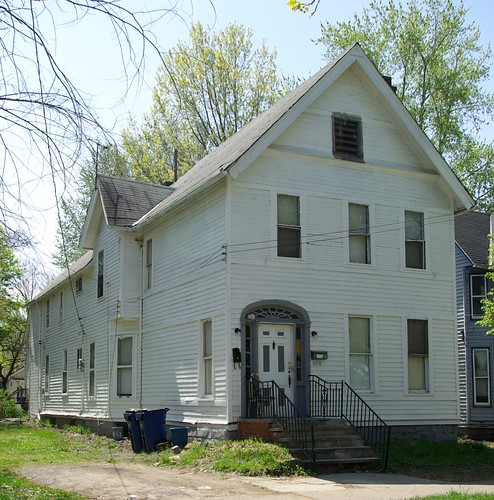
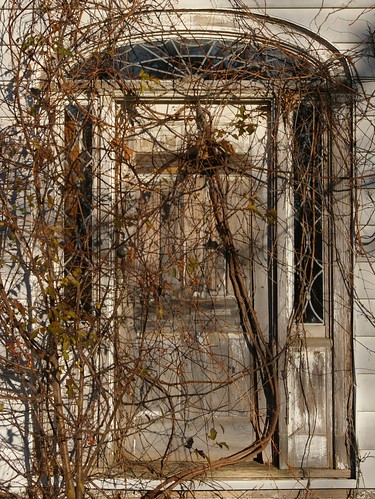
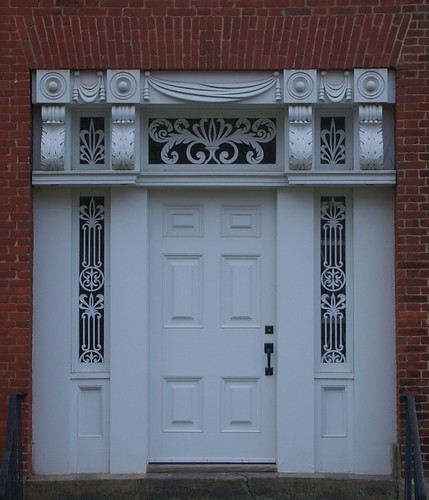
The house that I've lead with, with this beautiful front entry, is on the north side of the road, just east of Vrooman Road. The door itself is likely a later replacement - we can see that from the many small blocks glued together to make the cross pieces. The leaded glass sidelights and fanlights are definitely original. It's unusual to see a doorway of this style placed like this on a house. It makes me wonder if it might have been brought here from another house.
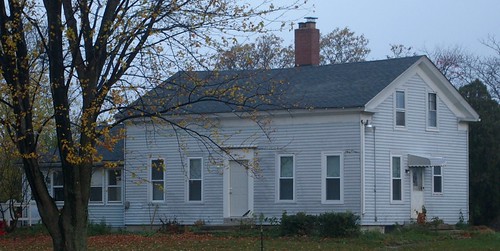
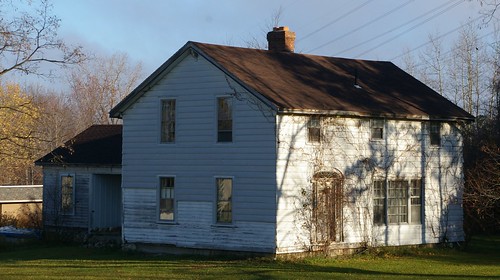
There are also examples of simpler structures, like this one.
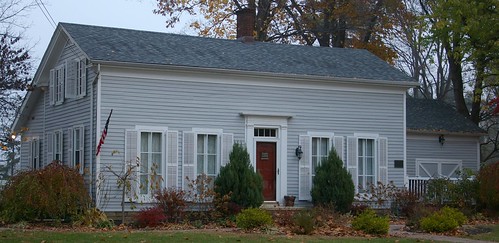
Continuing east, this house has a bit more ornament, but is otherwise similar to the preceding one. Originally, the windows on the front of the house would have been the same size as those on the side. They were likely enlarged in the 1860s or 1870s, though it could have been a bit later.
Continuing to Unionville, I came across this house - a perfect image of the perception of what a house of this period is supposed to be. I also encountered this church, in a style so common in this area in the mid-19th century.
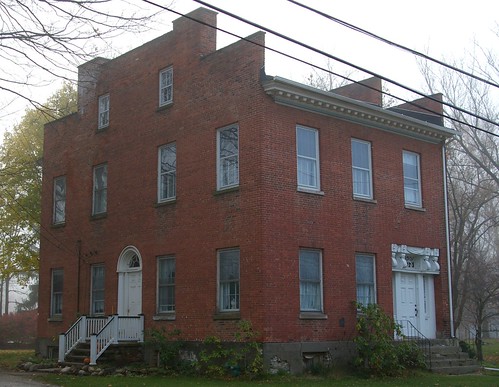
In Unionville, just south of the cemetery, on County Line Road, I came across this house, perhaps the most stunning of the trip.
The front doorway appears recently restored. It would be interesting to learn whether the wood in the transom and sidelights is based on some sort of historical element, or whether it was added to provide a bit of privacy.
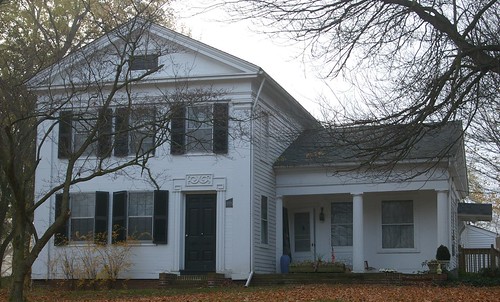
This classic form, also in Unionville, caught my attention.
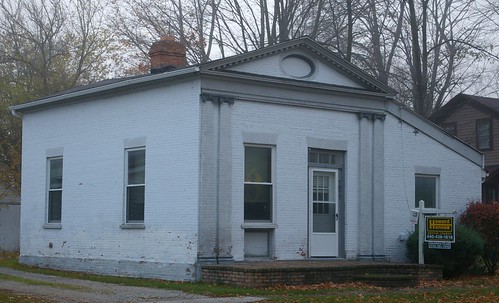
This tiny brick house served as a Connecticut Land Company office. It was built by Abraham Tappan, a Connecticut Land Company Surveyor, in 1817. The portion of the structure to the right of the front door is a later addition.
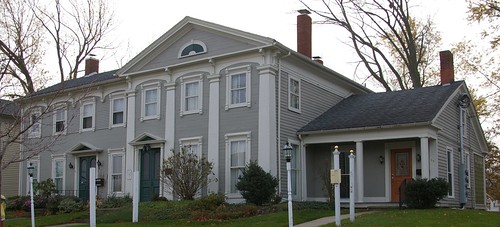
On my return west, I was able to better observe many of the historic structures on the south side of State Route 84, like this house at 25 Main Street, in Madison.
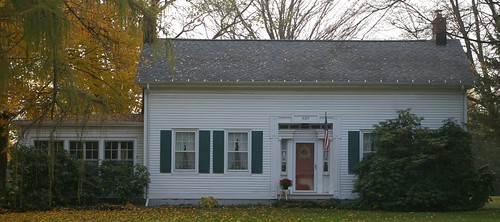
Note the detail in the doorway on this house. I speak frequently about the doorways because they are often the only places that the early builders put much detail, and as such, are examples of the highest form of their craft and artistic expression.
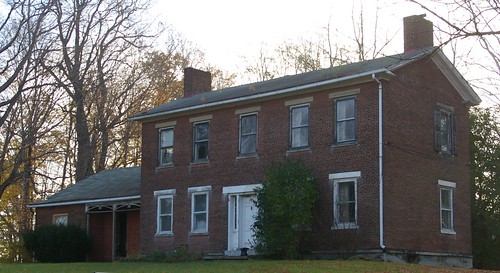
The landscape along this stretch of State Route 84 is worth taking a closer look at. These photographs represent but a small part of what I shot that day - please look at the full set for a better idea, but know that even that is but a sample.