Monday, April 19, 2010

Fort Huntington

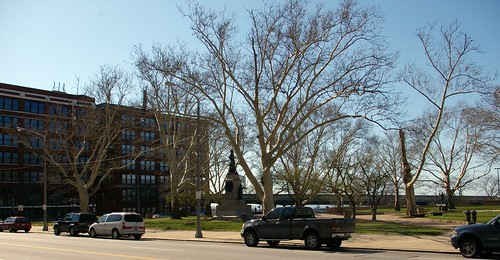
Fort Huntington Park

Have you ever driven past this park on Lakeside Avenue in downtown Cleveland, between Ontario and West 3rd Street?

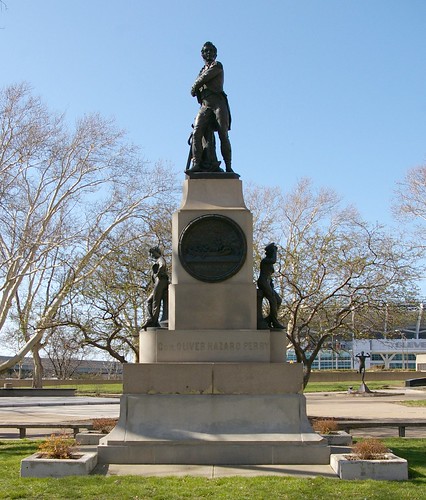
Oliver Hazard Perry memorial

You probably noticed this statue, erected to the memory of Commodore Oliver Hazard Perry and the role he played in the defense of the United States in the Battle of Lake Erie, during the War of 1812. A brief inscription on the reverse describes his accomplishment. This is not just another statue in a city park - this site is significant.

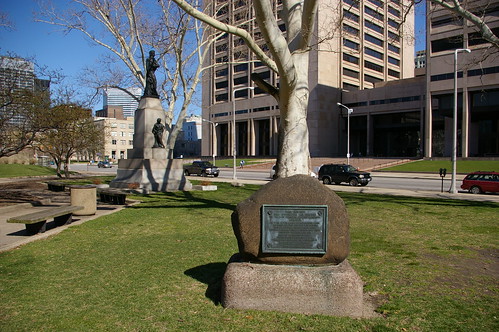
Fort Huntington historical marker

Near the Perry statue is a historical marker, identifying this land as part of Fort Huntington. The text reads:

Near this site Fort Huntington was erected by Captain Stanton Sholes' Company May, 1813.

On June 19, 1813, a part of the British fleet appeared off the fort but was drived away by a storm and no attack was made. General William Henry Harrison and the staff inspected the fort July, 1813.

Erected by the National Society United States Daughters of 1812, Commodore Perry Chapter, Cleveland, Ohio.

Marked on the 125th anniversary of the founding of Cleveland, A.D. 1921. Hon. W.S. Fitzgerald, mayor.


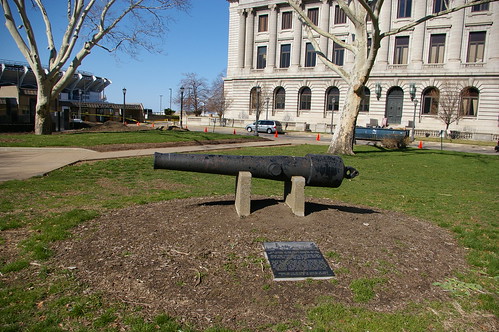
War of 1812 cannon

A canon captured from the British fleet during the Battle of Lake Erie has been placed nearby.

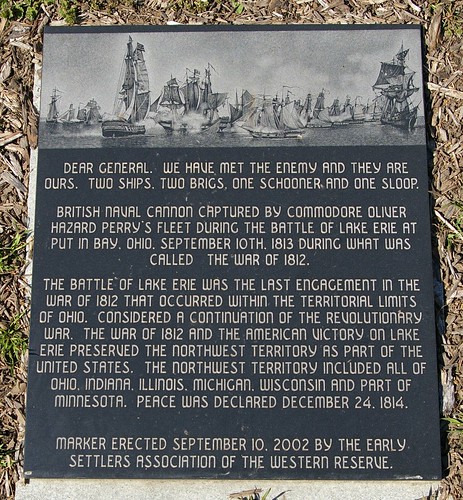
Oliver Hazard Perry memorial

The cannon is accompanied by this stone marker, installed in 2002 by the Early Settlers Association of the Western Reserve, describing its history and the significance of the Battle of Lake Erie and the War of 1812.

Another marker, erected on the Navy Bicentennial, in 1975, also commemorates the Battle of Lake Erie. Nearby stands a statue of Jesse Owens. The park also contains a memorial to the Cleveland Peace Officers who died in the line of duty.

So while this park may seem like just another city park, filled with monuments to various persons and groups, it is more than that. It is the site of Fort Huntington, a garrison built to defend this settlement from foreign invasion.

Friday, April 16, 2010

Vintage Cookbook Review: Plum Good


Please welcome our newest contributor, Camilla Grigsby. Ms. Grigsby will periodically review vintage Cleveland cookbooks.


You can tell a lot about the character of a community by the foods its people eat. And that's especially true when you thumb through the pages of a spiral-bound cookbook published by a church, neighbors in a small town, or the PTA of an elementary school. You can tell whether you're reading about working-class families, people with strong ethnic heritages, or housewives who actually do their own cooking. And depending on the era in which the cookbook was published, you get some idea of what kinds of foods were in vogue at the time. For instance, look at cookbooks from the 50s and 60s and take note of how many of the recipes involve gelatin. These little books are always good cultural relics, so it's nice to find them at used book shops, yard sales, and in your mom's cookbook collection.


In 1982, the Christ Child Society of Cleveland published Plum Good: A Collection of Recipes. I couldn't find much information on this charitable organization, but it seems they offered assistance to kids in the Cleveland area in the form of day camps, day care centers, and food, clothing and layette drives. Their fundraising cookbook capitalized on the popularity (or campiness?) of the city's Cleveland's a Plum campaign.


Like any other spiral-bound cookbook, Plum Good includes sections on basic categories of recipes, including Appetizers, Salads, Entrees (with a special sub-chapter on Quiches – how very early 80s), and Desserts, among others. Most of the recipes are compiled from Christ Child Society members and volunteers.


Two recipes in particular stand out as very apropos of Plum Good's era and geographic milieu: Better Than Robert Redford Cake, and Drunken Wieners. The wieners are an appetizer, and the recipe calls for catsup (note the spelling), brown sugar, cocktail wieners, and “2 cups bourbon (inexpensive type).” Because God forbid you'd spring for Maker's. (Note: I grew up in Kentucky, where anything less than Maker's is pure sacrilege). The Robert Redford cake (excuse me, it's better than Robert Redford – can you imagine any such thing in 1982?) calls for oleo, Royal Chocolate and butterscotch pudding mixes, and Cool Whip.


There are a few special sections of note following the general recipes. There's a section called “Cleveland Continental” that includes menus and recipes for meals representing many of the ethnic groups of Cleveland: Armenia, China, Hungary, Italy, and more. And there's a section called “Great Gifts” which includes recipes for candies, “Can-A-Loaf” (where you bake quick breads in various sizes of cans: coffee, shortening, tuna), and potpourri. All appropriate choices for homemade holiday gifts.


The diet section, “No” Thyself, is amusing, focusing on the “No” Thyself Diet, which seems to revolve around eating a lot of cottage cheese. The recipe for Cheese Danish, for instance, calls for lowfat cottage cheese, cinnamon and sugar substitute, canned pineapple and toast. Sounds...slenderizing.


Plum Good's true gem is its “Celebrities” section which includes recipes from Bob Hope, Howard Metzenbaum, Pauline Trigere, Phil Donahue, Mrs. John Glenn, Jan Voinovich, Fred Griffith and Dick Feagler, among many, many others. It seems the editors of the cookbook sent out requests for the various celebrities' favorite recipes and received quite a response, and most of the replies are reprinted here on their original letterhead. There's a recipe for Shirley Metzenbaum's pickles, Annie Glen's Ham Loaf, and John Lanigan's chili.


Tim Conway's is probably the best, typed on letterhead from his secretary:

“I once asked Tim about his favorite recipe, and to quote him it's this: TIM CONWAY'S RECIPE FOR STEAK AND POTATOS [sic] – take a steak and a potato, cook them, and when ready serve and eat. Now that's about the shortest recipe in history.”

The book is peppered with pictures of various Cleveland landmarks – the art museum, the West Side Market, the statute of Moses Cleaveland from Public Square along with interesting tidbits of trivia. For instance, did you know that the Flats was considered by Margaret Bourke-White to be a “photographic paradise”?


And lest you think the Plum Good cookbook wasn't written with at least a bit of someone's tongue in cheek, check out the various plum (and prune) recipes included. Almost every section has at least one. They include:

  • Teriyaki Plum Appetizers
  • Fresh Plum Daiquiri
  • Plum Nut Bread
  • Plum Kuchen
  • Fresh Plum Muffins
  • Shaker Plum Coffee Cake
  • Plum Good Spareribs
  • Sweet Sour Plum Salad & Dressing
  • Czech Plum Dumplings
  • Plums 'N Port
  • Chocolate-Almond Prunes
  • Majestic Plum Pudding
  • “I Can't Believe It's a Plum Bread in a Can"

While some of the recipes in this 1982 cookbook are a bit passé by now, the sentiments expressed in Plum Good's introductory salute to Greater Cleveland are echoed by many of the city's biggest cheerleaders today:

“A waterfront metropolis with a heartbeat of almost two million people...a melting pot of talent and human resources from every land...renowned for its universities, hospitals, museums, theatres, concert halls and recreation facilities.


Cleveland is a dowager who treasures her memories of yesterday, nurtures her ideals of today and endows her heirs of tomorrow. Our city extends untold largesse to those who are disadvantaged through the dedicated efforts of those who care.”


Camilla Grigsby earned her MLIS from Kent State University in 2006. She collects cookbooks, particularly weird ones, and enjoys partaking of Cleveland's diverse culinary heritage. Camilla lives in a Cleveland Heights Colonial and would like to sell it to you, cheap.

Wednesday, April 14, 2010

Another one bites the dust

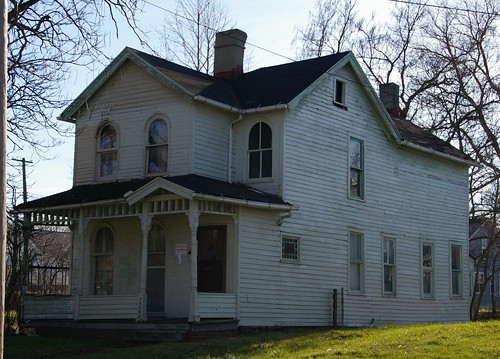
2200 East 69th Street, Cleveland - Condemned

I stopped to photograph this house last April when I saw the "condemned" notice attached near the front door. It's located at 2200 East 69th Street, in the Fairfax neighborhood of Cleveland, Ohio. I haven't been by there in a little while, so I'm not clear as to whether this one has actually been demolished yet.

The house retains most of the original features. Note the windows on the front of the house with the rounded top, and the stained glass one on the side, probably on the stairs to the second floor.

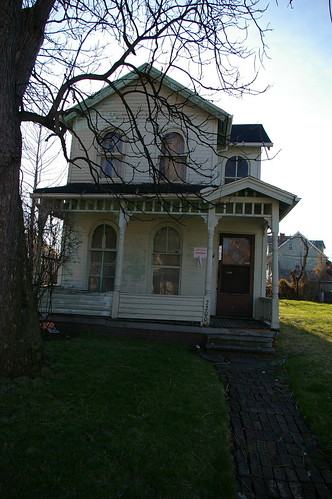
2200 East 69th Street, Cleveland - Condemned

There's a nice bit of detail in the porch. The proportions of the house as a whole are just right. Doesn't it just seem so comfortable on the lot, when seen from this angle, like it really ought to stay here?

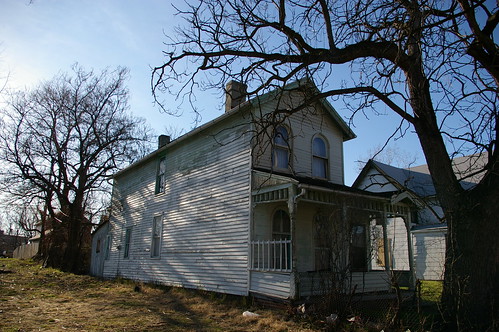
2200 East 69th Street, Cleveland - Condemned

We should be thinking about fixing up houses like this, too. Well proportioned structures with good bones that are relatively unaltered - these are the buildings that make up our neighborhoods - they're the ones that we need to protect.

Should this one have been saved? I don't know.

It's easier to renovate a structure like this than some of the grand places we've argued for. The lack of complicated interior detail makes for easier work and provides more freedom - it's not just a lovely space that reflects only the styles of the architect, builder, or original owner. It's important to preserve houses with incredibly complex original detail, of course, but that's not for everyone. Some of us just need a house with good proporions and good history that we can work on and make into our home.

Monday, April 12, 2010

Raymond Johnson Chapman

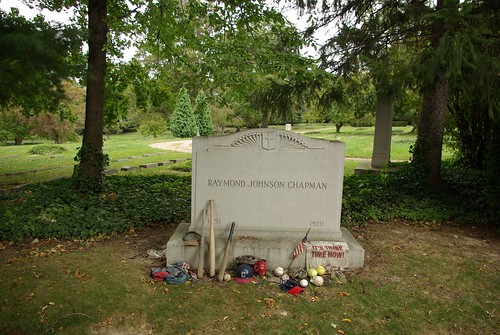
Raymond Johnson Chapman grave marker

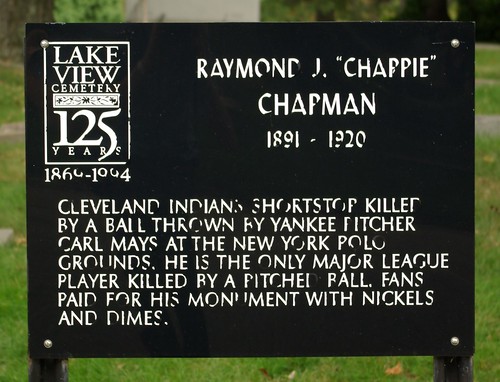
With the start of the baseball season, we remember Raymond Johnson Chapman (January 15, 1891 - August 17, 1920), the last professional baseball player to be killed by a pitched ball. The ball was thrown by Carl Mays, of the New York Yankees, at the New York Polo Grounds.

His funeral was at St. John Cathedral. He is buried in Lake View Cemetery.

Raymond J. "Chappie" Chapman historical marker

This historical marker, erected by the Lake View Cemetery Association, commemorates his life.

The Pitch that Killed by Mike Sowell documents the story behind this tragedy.

Lake View Cemetery is located between Euclid and Mayfield Roads in Cleveland. Access to the grounds may be made from either road. The mailing address is 12316 Euclid Avenue, Cleveland, Ohio.

Friday, April 9, 2010

Erie Street Cemetery

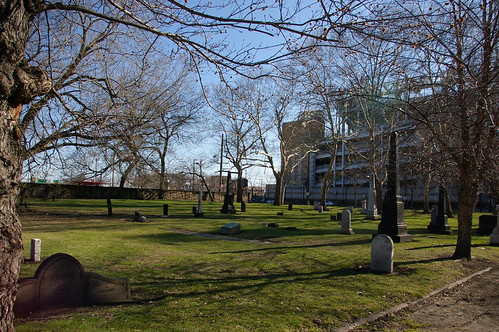
Erie Street Cemetery, Cleveland

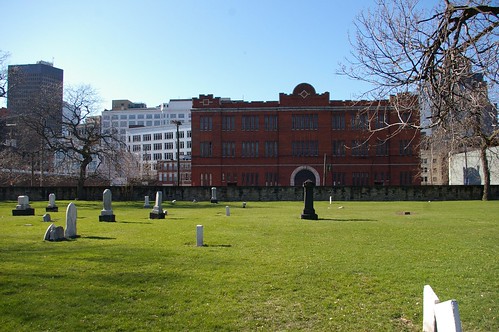
I love Erie Street Cemetery. It's a beautiful little bit of greenspace in the middle of downtown Cleveland. It is located between East 9th and East 14th Streets.

The cemetery was founded in 1826 as the first permanent burying ground. It replaced a site just south of Public Square - Ontario Street Cemetery.

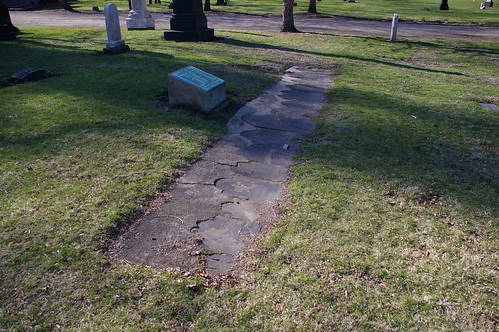
Graves moved from Ontario Street Cemetery

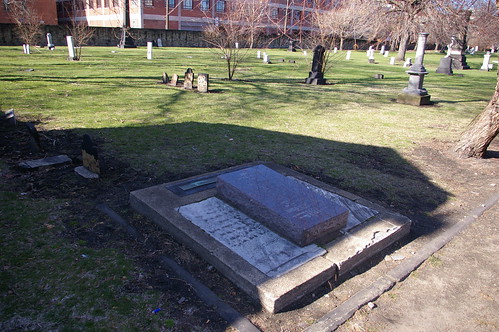
Several graves were moved here in 1826 from Ontario Street Cemetery. A historical marker, erected by the Early Settlers Association, identifies the graves that were moved. The stones have been placed flat on the ground.

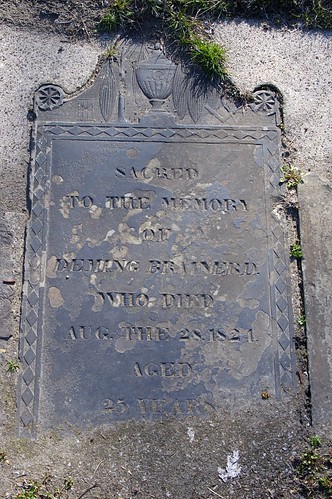
Grave moved from Ontario Street Cemetery

One of the graves moved from the Ontario Street Cemetery is that of Deming Brainerd. Two other are William Prout and Amy Lewis. Another marker identifies the burial site of others, unknown, moved here from the Ontario Street Cemetery.

Burial site of Joc-O-Sot

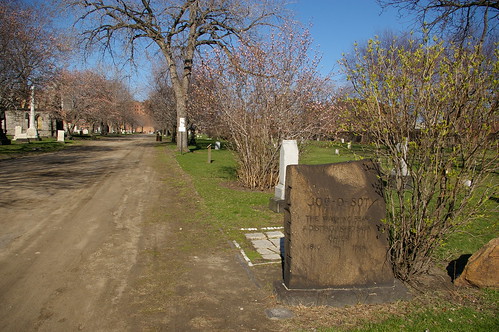
The burial site of Joc-O-Sot, or Walking Bear is marked with this stone, which has a plaque on the reverse side.

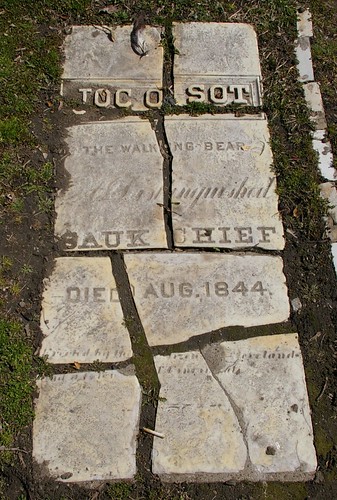
Chief Joc-O-Sot gravestone

That marker was made to replace this, the original grave marker, which fell victim to vandalism. It lists the date of his death incorrectly. The correct date is September 3, 1844.

Graves of Lorenzo and Rebecca Carter

The cemetery contains the graves of Lorenzo and Rebecca Carter, the first permenant European Amercian settlers to the city of Cleveland. The Early Settlers Association erected a marker commemorating their lives.

Erie Street Cemetery, Cleveland

The Erie Street Cemetery is a vital piece of Cleveland history. It remains the earliest surviving piece of historical fabric in downtown Cleveland. At the same time, it is a nice place to take a lunch break or spend a few minutes before a baseball game.