Monday, April 12, 2010

Raymond Johnson Chapman

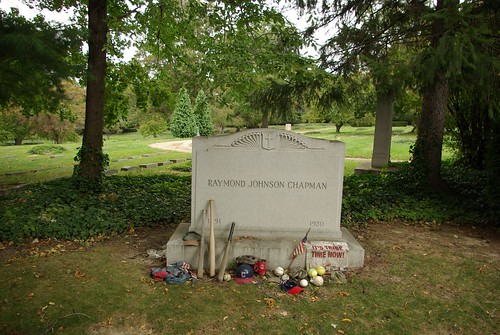
Raymond Johnson Chapman grave marker

With the start of the baseball season, we remember Raymond Johnson Chapman (January 15, 1891 - August 17, 1920), the last professional baseball player to be killed by a pitched ball. The ball was thrown by Carl Mays, of the New York Yankees, at the New York Polo Grounds.

His funeral was at St. John Cathedral. He is buried in Lake View Cemetery.

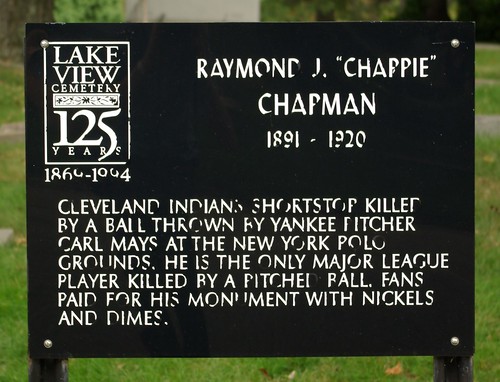
Raymond J. "Chappie" Chapman historical marker

This historical marker, erected by the Lake View Cemetery Association, commemorates his life.

The Pitch that Killed by Mike Sowell documents the story behind this tragedy.

Lake View Cemetery is located between Euclid and Mayfield Roads in Cleveland. Access to the grounds may be made from either road. The mailing address is 12316 Euclid Avenue, Cleveland, Ohio.

Friday, April 9, 2010

Erie Street Cemetery

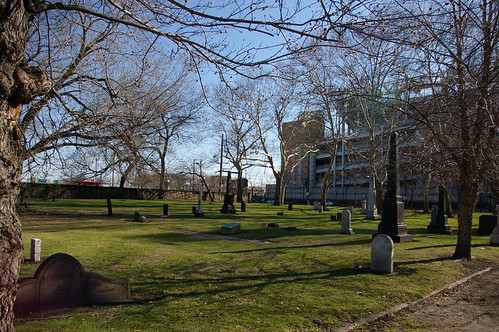
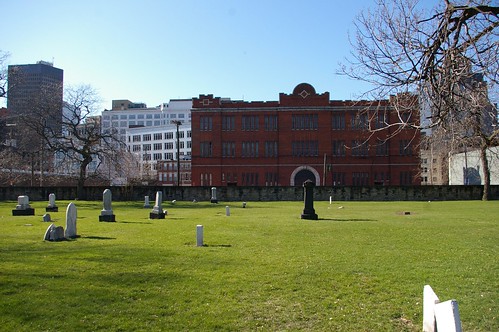
Erie Street Cemetery, Cleveland

I love Erie Street Cemetery. It's a beautiful little bit of greenspace in the middle of downtown Cleveland. It is located between East 9th and East 14th Streets.

The cemetery was founded in 1826 as the first permanent burying ground. It replaced a site just south of Public Square - Ontario Street Cemetery.

Graves moved from Ontario Street Cemetery

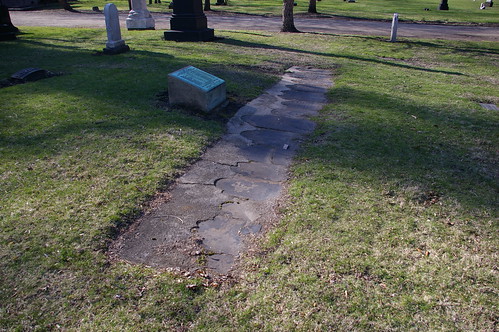
Several graves were moved here in 1826 from Ontario Street Cemetery. A historical marker, erected by the Early Settlers Association, identifies the graves that were moved. The stones have been placed flat on the ground.

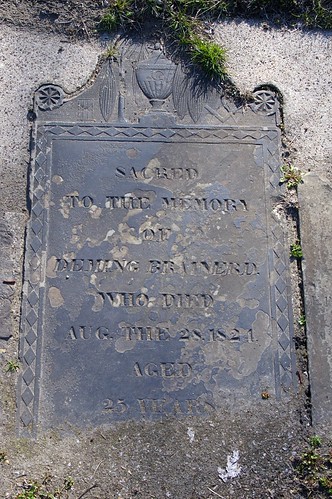
Grave moved from Ontario Street Cemetery

One of the graves moved from the Ontario Street Cemetery is that of Deming Brainerd. Two other are William Prout and Amy Lewis. Another marker identifies the burial site of others, unknown, moved here from the Ontario Street Cemetery.

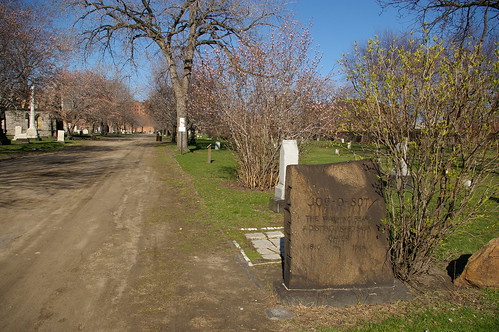
Burial site of Joc-O-Sot

The burial site of Joc-O-Sot, or Walking Bear is marked with this stone, which has a plaque on the reverse side.

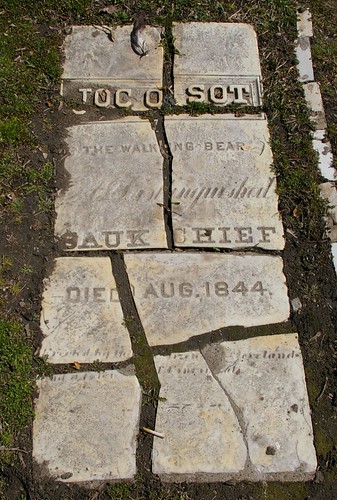
Chief Joc-O-Sot gravestone

That marker was made to replace this, the original grave marker, which fell victim to vandalism. It lists the date of his death incorrectly. The correct date is September 3, 1844.

Graves of Lorenzo and Rebecca Carter

The cemetery contains the graves of Lorenzo and Rebecca Carter, the first permenant European Amercian settlers to the city of Cleveland. The Early Settlers Association erected a marker commemorating their lives.

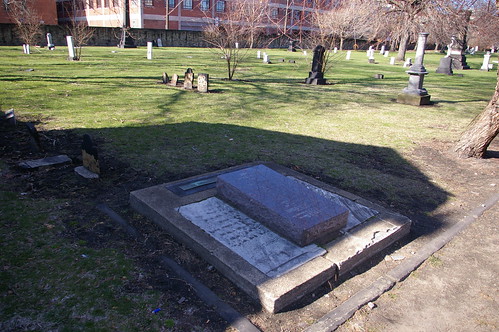
Erie Street Cemetery, Cleveland

The Erie Street Cemetery is a vital piece of Cleveland history. It remains the earliest surviving piece of historical fabric in downtown Cleveland. At the same time, it is a nice place to take a lunch break or spend a few minutes before a baseball game.

Thursday, April 8, 2010

Cleveland Landmarks Commission meeting April 8, 2010

This is the first of what will be many articles reporting on the proceedings of the Cleveland Landmarks Commission meetings.

The commission met at at 9:00 am today in room 514 of the Cleveland city hall. The following items were addressed:

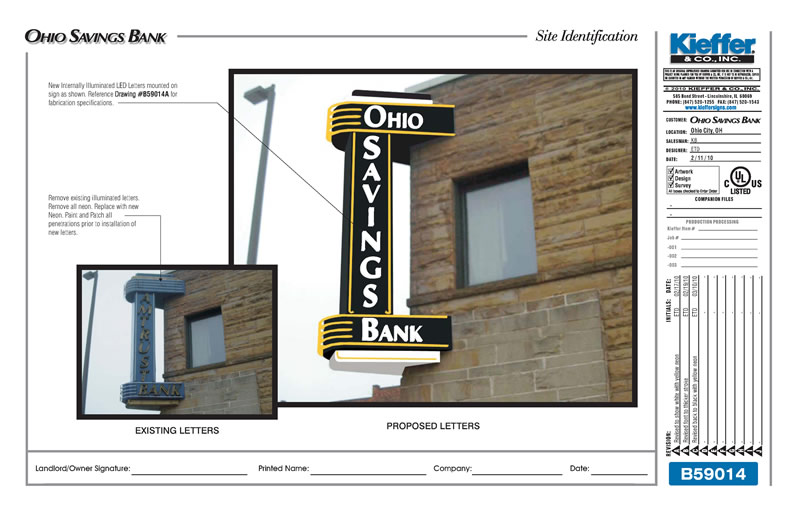
Ohio Savings Bank - 1866 West 25th Street - sign
Ohio Savings Bank (formerly AmTrust Bank, and before that Ohio Savings Bank) needed to change their neon sign to reflect the new name. The existing neon sign was installed relatively recently - within the past 10 years. The matter was before the commission because the building is located in a historic district.

At their last meeting, the commission presented their concerns regarding the proposed new sign. The representative from the sign company took the concerns back to his client, who agreed to the changes.

This image illustrates the changes to the sign. The neon letters will be removed and replaced with backlit letters. The metal frame and other neon will be retained. The commission voted unanimously in favor of the sign as proposed, with the exception of Thomas Coffey, who had to abstain due to a business relationship involving his firm.

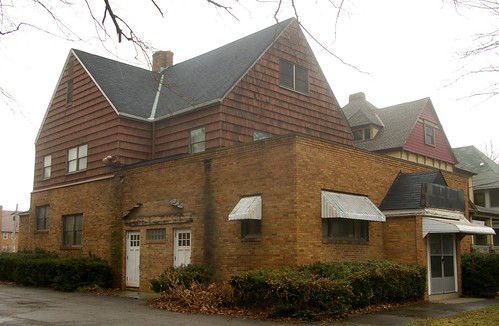
Henry C. Holt House / Holowchak Funeral Home / Ukrainian Museum-Archives - 1208 Kenilworth Avenue - Demolition
We've covered this house, one of six left standing in the city designed by Charles Schweinfurth, and its proposed demolition in considerable detail. The Ukrainian Musuem-Archives owns the building and wants to use the space for surface parking and eventual expansion. We described the history of the house and its residents and what it might have looked like. We were able to document another house in the neighborhood, also designed by Schweinfurth, the Richard T. Coleman residence. On the basis of the interior of the Coleman residence, which was built at about the same pricepoint, at about the same time, I had high hopes for the potential that might be present in the house.

Some of the members of the commission visited recently visited this house and discussed what they saw at the meeting. The meeting agenda includes photographs of the interior. Note that the first few photographs, labeled "1202 Kenilworth" are of the building next door that currently houses the Ukrainian Museum-Archives.

Very little original detail was still present, especially when compared with the Coleman residence. Further, the physical structure of the house had been severely modified. All of the original windows have been removed, the grand staircase had been removed, and it had lost much of what made it an interesting house.

I expressed my concern regarding the precedent that turning this space into surface parking would set. The committee tended to agree. They had previously said that they would want the start of the parking lot to be even with the setback line, and that they would want additional screening to help keep the visual character of the block.

The staff of the commission reluctantly recommented the demolition, pending documentation of the sturcture and a salvage plan. The commission voted unanimously to allow the demolition of the structure, with the provision that the above conditions were met.

1723 West 32nd Street - Renovation
The house in question is a property in the Ohio City historic district. It was condemned as the result of damage from a fire in the house next door, which burned to the ground, claiming four lives.

The present owners bought the house, built in the 1880s or 1890s, with the intent of making it into a single-family home again. They also plan to make the house much more energy-efficient, with additional insulation that will expand the exterior dimensions of the house by two inches in all directions. The windows will be replaced with triple-glazed models which will be fitted into new jambs.

Though my opinions of replacement windows are well known, I have to say that I am quite pleased with the quality of the product they have chosen and their overall vision for this project. I look forward to seeing how this house turns out, and hope, if possible, to document some parts of it as an example of the right way to do energy-efficient retrofits to a house of this age. I applaud the owners of this project for their efforts thus far, and wish them luck on this project. The commission voted unanimously in favor of the plan.

The Ukrainian Museum-Archives will have to go before the Landmarks Commission before they proceed on the parking lot and landscaping. They expect to do this in the next month or two.

ABC Bail Bonds - 1280 West 3rd Street - signs
ABC Bail Bonds proposed new signage for their windows as well as a freestanding sign and one for the side of their building. The signage seems historically appropriate, and a good fit.

The commission voted unanimously to approve the signage plan.

Anytime Fitness - 11517 Clifton Boulevard - Signs
Anytime Fitness occupies the building on Clifton formerly occupied by Hollywood Video, a single story building of relatively recent construction. They had to appear before the commission because the size of the signage that they wanted to use was larger than what was allowable per code requirements.

The size of the signage as proposed seemed to fit the building well. The commission voted unanimously to approve the signage plan.

4717 Clinton Avenue - Renovation plans
This circa 1860 Greek Revival style house has been purchased by an investor who plans to rehab the property and sell it. The formal hearing for this property will be held at the commission's next meeting. Councilman Zone expressed his support for the plan at this meeting because he will be unable to attend the next one.

The plan as suggested seemed to eliminate what little historical detail was still present on this house, in favor of details that were closer to that of the turn of the century. I will be investigating this matter further and will report on it at a later date.

Franklin - West Clinton Historic District Design Review Committee
The creation of this committee was proposed. Councilman Zone spoke in favor of its members, who will be: Chris Bongorno; Bruce Buchanan; Joe Figueroa; Dave Jurca; Kevin Kantz; Cathy Marquardt; Rick Matisak; and Randall Shorr. The commission voted to approve the committee.

I know that at least one of the committe members is a reader of this blog. I wish them luck in their work serving that community.

St. Wendelin Church - 2281 Columbus Road - Landmark Nomination
The church is one of the ones that will be closing. The whole campus, built in the 1920s, was nominated for Landmark status. The commission approved the nomination, which will now go before city council.

The church is an interesting structure. We hope to report more on this complex in the future.


The next Cleveland Landmarks Commission meeting will be held on Thursday, April 22, at 9:00 am at the Cleveland City Hall.

Wednesday, April 7, 2010

Envisioning the Henry C. Holt residence

Henry C. Holt residence

This Thursday, the Cleveland Landmarks Commission will address the proposed demolition of the Henry C. Holt residence. It is one of six extant houses in Cleveland designed by Charles Schweinfurth, the greatest architect in this city in the last quarter of the 19th century. When we look at it as it is today, it can be hard to imagine how it once appeared.

I've finally seen photographs of the interior. I'm not sure quite how to respond. Had this information been available earlier, things would have been easier for all involved parties. This post will help illustrate what this once great house looked like.
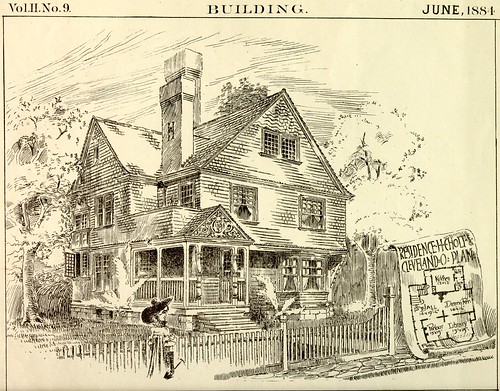
Henry C. Holt residence
From Building, June, 1884. Courtesy of Special Collections, Cleveland Public Library.

This illustration provides the best record we have of what the exterior might have looked like. Most of the details are the same as those present in this 1954 photograph.

Some have suggested that the 1954 photograph represents a more accurate deption of the house as built than the 1884 illustration. I believe otherwise. This image, while of poor quality, from the Plain Dealer, May 10, 1895, part 2, page 7, shows a couple items that have changed. It includes the second floor porch, which was gone by 1954. It also shows the porch in its original format, which was expanded, probably before 1913, as evidenced by this detail from a Sanborn Fire Insurance map. The 1896 Sanborn map confirms the original shape of the front porch.

It is worth noting that, on the sides of the house visible here, all but one of the windows appear to be of the original size and in the original location. While they are replacements, it will be much easier to return the house to the proper appearance than it might have been had the size of the window openings been altered.

The rather smooth exterior lines appear to be the result of new shingles having been installed over the existing shingles at some point in the past. The removal of these shingles will likely reveal a considerable amount of the original detail, just as is often the case when aluminum or vinyl siding is removed from a historic home. Schweinfurth's Richard T. Coleman residence illustrates this clearly.

The Richard T. Coleman residence and the Henry C. Holt residence are good subjects for comparison. The Holt residence was designed by Charles and Julius Schweinfurth in 1883, and built at a cost of $5,000. The Coleman residence was built by Charles Schweinfurth in 1889, at a cost of $6,000. The Coleman residence is a bit larger than the Holt residence, so the construction cost per square foot for the Holt residence was likely higher, and with that, the finish quality as well. By comparison, the Sylvester Everett residence, an 1883 Schweinfurth commission (now demolished), cost $200,000.
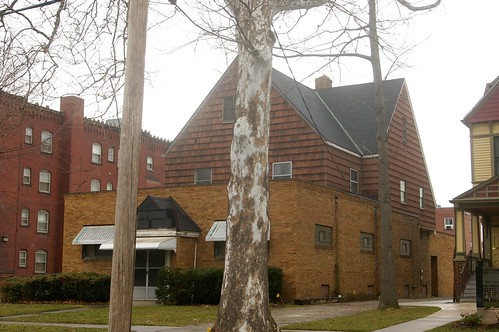
Henry C. Holt residence

As for the other side of the house, we can reasonably assume, based on proportions, that the windows on the second and third floors are in the original locations and of the orignial proportions. Removing the brick from the first floor will reveal enough information to identify the original window openings and install proper replacements there.
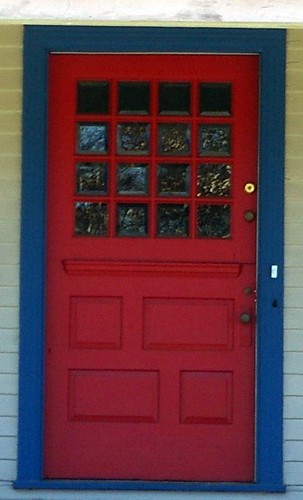
J.R. Owens residence front door

The illustration in Building shows, through the porch, the top half of the front door. It appears identical to the front door on the J.R. Owens residence, another house designed by Schweinfurth, at 1956 East 75th Street.
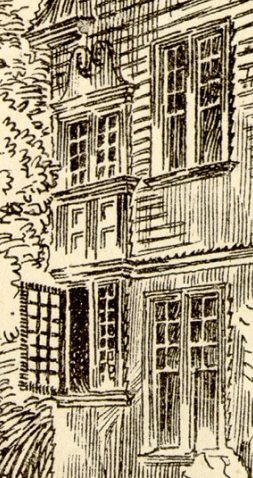
Henry C. Holt residence (detail)
Detail. Photograph dated January 14, 1954. Courtesy of the Photograph Department, Cleveland Public Library.

Another detail worth noting is the set of classically detailed windows, to the rear of the house, which surely throw a considerable amount of natural light on the ornate woodwork that encloses the stairs.
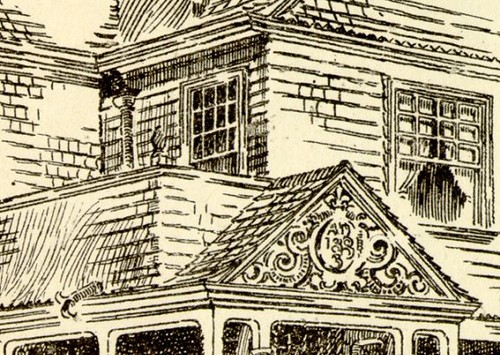
Henry C. Holt residence
Detail. Photograph dated January 14, 1954. Courtesy of the Photograph Department, Cleveland Public Library.

This image shows a couple of interesting items. The carved detail over the porch says "A.D. 1883". There's an interesting (if possibly no longer code legal) drain outlet from the second floor porch.
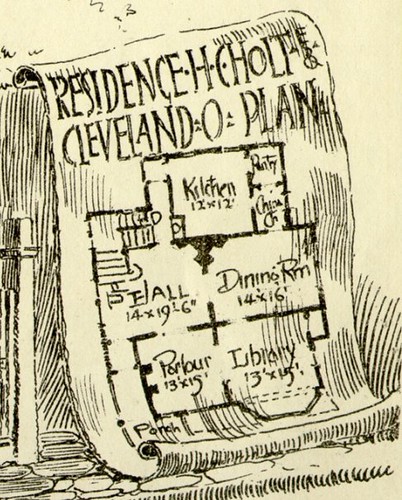
Henry C. Holt residence
Detail. From Building, June, 1884. Courtesy of Special Collections, Cleveland Public Library.

This floorplan can help us to make some guesses as to how the interior of the house might appear. Note that there are three fireplaces on the first floor, just as in the Coleman residence.
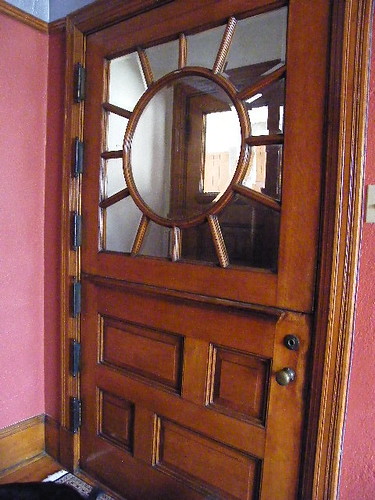

Photograph by Keri Zipay

The front door, noted above, led into a small entryway and another door. It might well be something as impressive as this one, in the Coleman residence.


Photograph by Keri Zipay

The main hall featured a grand staircase, perhaps of a style similar to the one in the Coleman residence. Alternately, it may have been similar to one that existed in Schweinfurth's own residence.
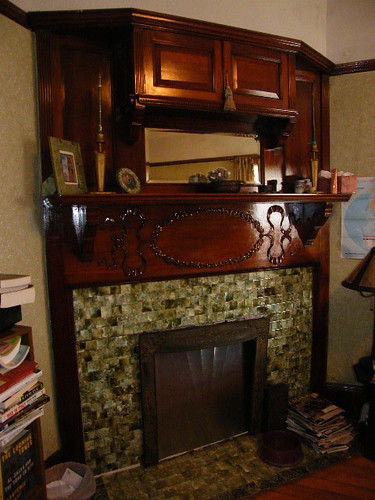

Photograph by Keri Zipay

The main hall included a fireplace situated in a corner, likely similar in finish quality to this one. From the main hall, one might have passed through pocket doors to the parlor.


Photograph by Keri Zipay

The fireplace in the parlor stuck out from the wall, like this one in the Coleman residence. From there, one might enter the library. It's difficult to know how it might have appeared. It could have been similar to the one in Schweinfurth's own residnece.

The dining room also featured a fireplace, situated in the corner.
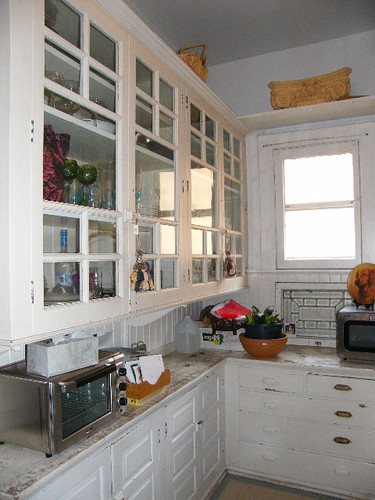

Photograph by Keri Zipay

Between the dining room and the kitchen was a pantry. It was likely similar in design to this one, in the Coleman residence. Note that if it was being consistent with the rest of the house, the woodwork would have been unpainted.
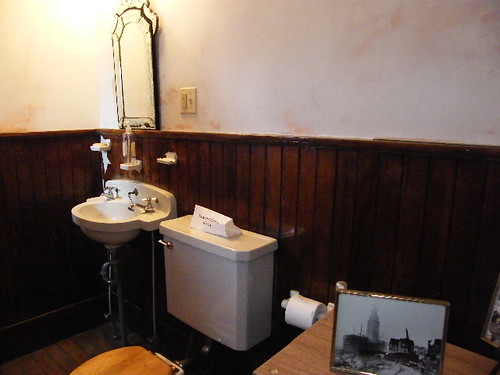

Photograph by Keri Zipay

The kitchen was likely relatively simple. It would have probably featured panelling similar to that in the Coleman residence. I use this picture of the bathroom from the Coleman residence because the kitchen in that house featured the same panelling, but in the bathroom, it remained unpainted.

The Second Floor

Photograph by Keri Zipay

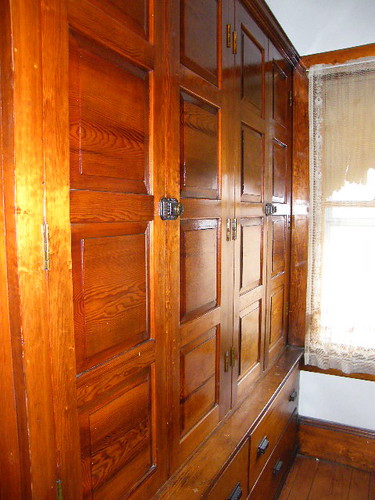
It's hard to know the features of the second floor or how it might have been configured. One can safely assume that there may have been a couple fireplaces, as in the Coleman residence. It's also safe to assume that it featured some sort of built-in cabinetry, as shown here.

Photograph by Keri Zipay

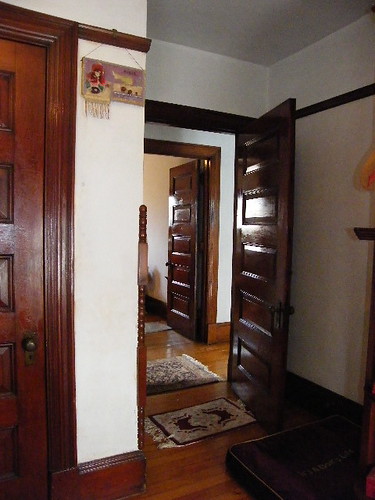
The finish quality of the bedrooms was likely similar to that shown here, though the style could have been different. There would have been a bathroom, of course, probably similar to that on the first floor of the Coleman residence.

Some of the houses of this vintage feature a partially finished third floor, for servants. It's unclear what the state of this one was.

If you are interested in the people who lived and worked in this house and how they shaped the community, you might want to take a look at my post on that subject. It provides a broader perspective as to the significance and importance of this structure.


I don't know what to say at this point. All that made this house grand is gone. That said, a parking lot would not be a fitting tribute.

I hope that you are able to make it to the Cleveland Landmarks Commission meeting this Thursday, at Cleveland City Hall, at 9:00 am. Your presence will help the argument for the preservation of this house. If you cannot attend, consider sending an email to Landmarks Commission secretary Robert Keiser, expressing your feelings on the matter.

Monday, April 5, 2010

Historic photos of your house!

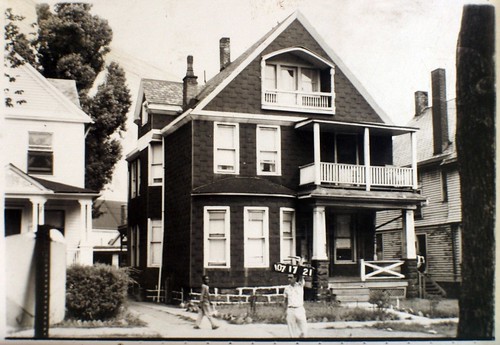
107-17-021
House on Kenmore Road - demolished

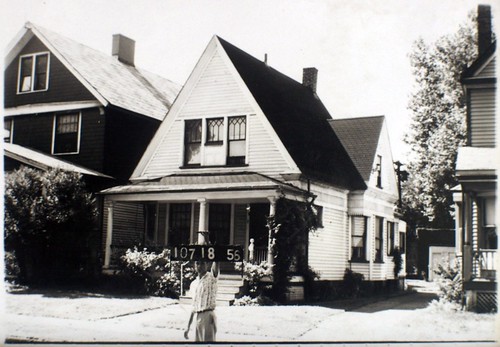
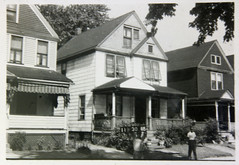
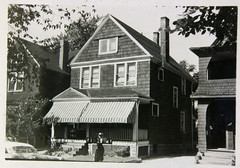
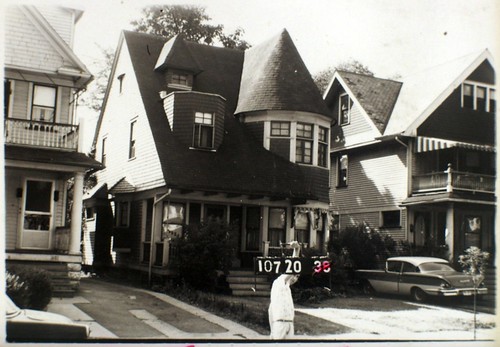
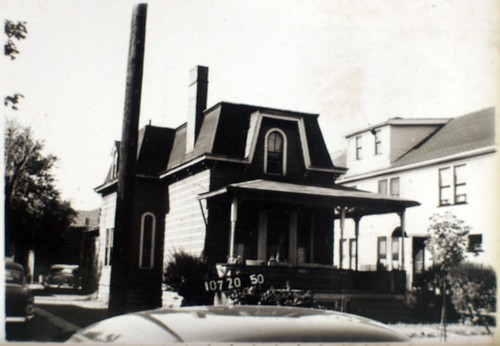
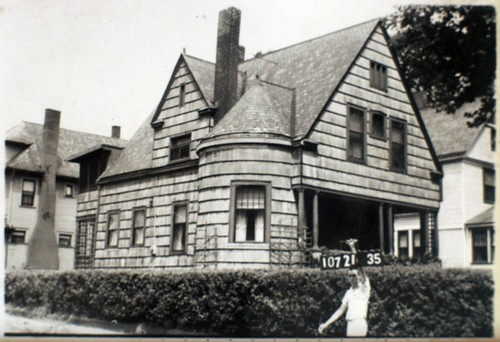
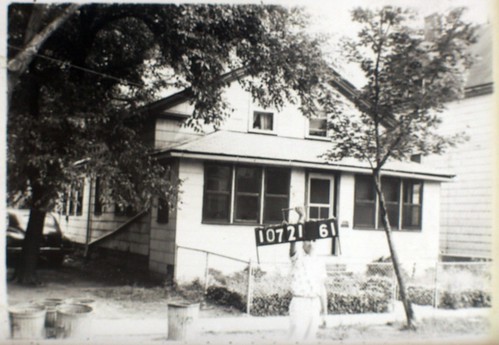
In the 1950s, the precedessors to the Cuyahoga County Auditor went through the county and photographed every single house, for tax valuation purposes. These photographs, about 1.5" x 2.25", were glued onto cards that described the size of the property, its amenities, and condition. At some point, these cards were transferred to the Cuyahoga County Archives, on Franlin Avenue, in Ohio City.

Not every card is present. Some are missing, and on some, the photographs have fallen off. Still, they are a valuable record of the built environment of this area.

107-18-056
8706 Harkness Road, Cleveland, Ohio - standing

A few months back, I went to the County Archives to research my own house. While I was there, I started looking through the photographs of the Hough area, where I work. I put my camera on a tripod, used a piece of cardboard to line up the photographs so that I didn't have to keep looking through the viewfinder, and started photographing them. In the space of two and a half hours, I was able to photograph about 330 of them. This is the result.

The photographs were grainy to begin with. A six megapixel digital camera captures virtually all of the information present in the original photograph. A little bit of post-processing, and they're ready to share.

If you do make it down to the Archives, it's worth taking the time to look at your neighbor's houses, too. The property cards are in order of parcel number, so you should verify your neighbor's parcel numbers beforehand - they aren't necessarily numbered sequentially with yours.

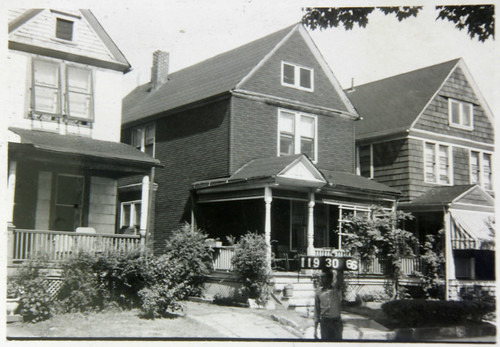
119-30-066

As an example, take this, the house that Langston Hughes lived in during his sophomore and junior years of high school, from 1917 to 1919. It is located at 2266 East 86th Street, in the Fairfax neighborhood of Cleveland. It has recently been nominated as a Cleveland Landmark. The Fairfax Renaissance Development Corp. is in the process of rehabilitating it.

119-30-065 119-29-041

Now look at the photos of the houses of his neighbors, to the south and north, respectively. These photographs reveal parts of the Langston Hughes house not shown in the photo for 2266 East 86th Street.

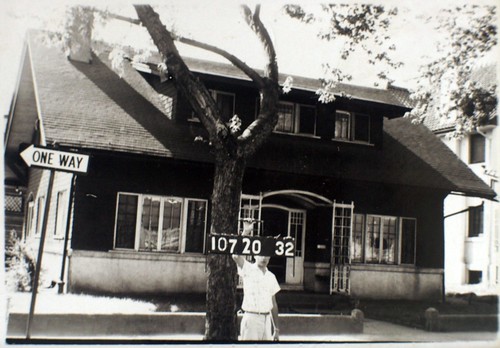
107-20-032

Each photograph includes someone holding a sign that displays the parcel number of the house in question, as shown here, at 1621 Holyrood Road. This is quite helpful. It makes it possible to just digitize the photographs, without having to record the caption information. It's also quite helpful when photographs have become unglued from the property cards - it makes it possible to figure out which card they ought to be reattached to.

These images can be especially useful in the cases like this house, where exterior modifications have been significant. They are also quite useful in a neighborhood like Hough, where at least half the houses present in the mid-1950s have been demolished. These photographs can help paint a picture of the neighborhood as it was. You can use a set of photographs to document what a whole block used to look like.

The following are a few of my favorites:

107-20-039
1627 Holyrood Avenue - Built in 1900 for Harold Randolph - standing

107-20-050
9214 Edmunds Avenue - demolished. The house appears to have been built in the 1870s, at 1861 East 90th Street. It was moved to this site in 1909. An apartment building was built at the location on East 90th Street shortly after.

107-21-035
1618 Ansel Road - standing. The house was built in 1892 for George Richardson, a local real estate developer. It was sold soon after to Elah French, who lived in it with his wife Adelaide.

107-21-061
Parcel 107-21-061 - demolished. A nice, little Greek Revival farmhouse.

I would love to see more of these photographs digitized. There's no way any individual could possibly do this. However, if we were to each photograph some, we could eventually achieve this goal.